

Multilingual replies: an AI chatbot that answers in Vietnamese and English
Multilingual replies means each customer gets an answer in the language they wrote in, Vietnamese or English, detected from their own message with no setting to change. The assistant also understands Vietnamese typed without accents, common shorthand and typos, which is how most people type on a phone.

How does the assistant choose the language?
- It reads each customer message and replies in the same language, Vietnamese or English.
- The choice is made for every message, so a customer who switches language mid-chat gets the next reply in the new language.
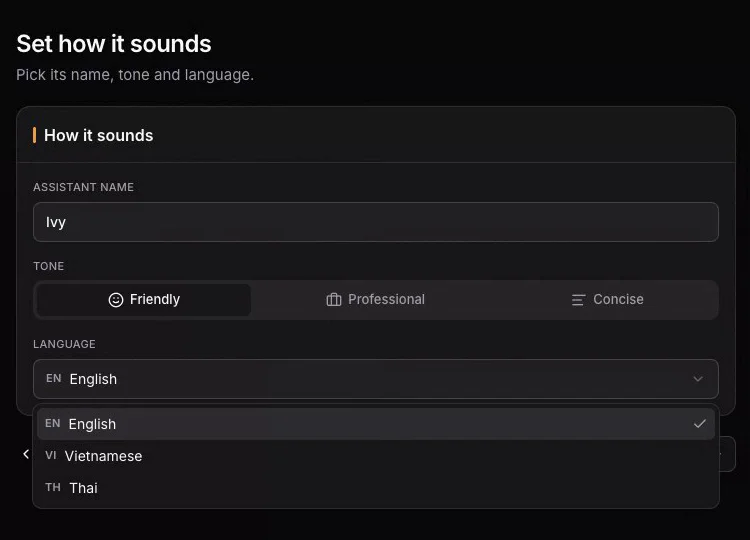
- Thai is available as the shop's own language, which you select; it is not detected from each message.
Messy messages are fine
| The customer types | The assistant reads |
|---|---|
| "ao nay con size M ko" | "Áo này còn size M không?" |
| "ship ve da nang bao lau" | "Ship về Đà Nẵng bao lâu?" |
| "gia bn vay shop" | "Giá bao nhiêu vậy shop?" |
| "Do you ship to Singapore?" | An English question, answered in English |
Nobody has to type carefully or switch keyboards to get a useful answer.
The same facts in every language
Product names, prices and stock come from your catalog, so they are the same whichever language the customer uses. The assistant follows the same handoff rule in both languages: when it is not sure, it says so and passes the chat to your team, as described in honest handoff.
Pick a tone and a name
Choose friendly, professional or concise and give your assistant a name. Each tone has its own rules for Vietnamese and for English, so a friendly reply sounds natural in both.
Tips for stores with foreign customers
- Keep sizes, colours and product names in your catalog the way customers type them.
- If many customers write in English, add English versions of your shipping, returns and payment policies; see store knowledge.
- Test an unaccented question and an English question in private preview before you go live.
Frequently asked questions
Which languages does the assistant reply in?
Vietnamese and English, detected from each customer message with no setting to change. Thai is available as a shop language you select; it is not detected from each message.
Does it understand Vietnamese typed without accents?
Yes. A message like "ship ve da nang bao lau" is understood like the accented version, and so is common shorthand such as "ko", "dc" or "bn".
Should I write my knowledge in both languages?
Not necessarily. Prices and stock come from your catalog in either language. If many customers write in English, adding English versions of your key policies makes those answers read more naturally.
Does the tone apply in both languages?
Yes. Friendly, professional and concise each have their own rules for Vietnamese and for English replies.